La estrategia: usar el "granel" adecuado para el trabajo
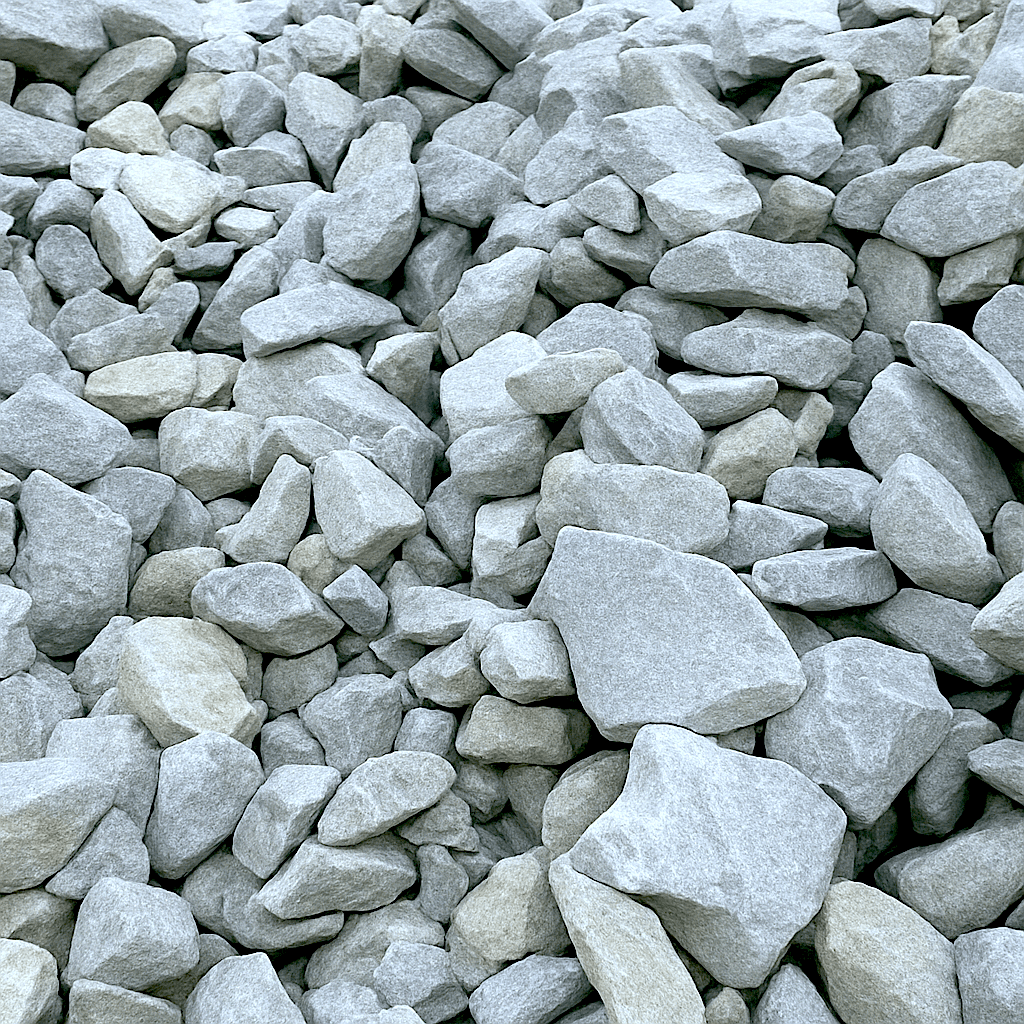
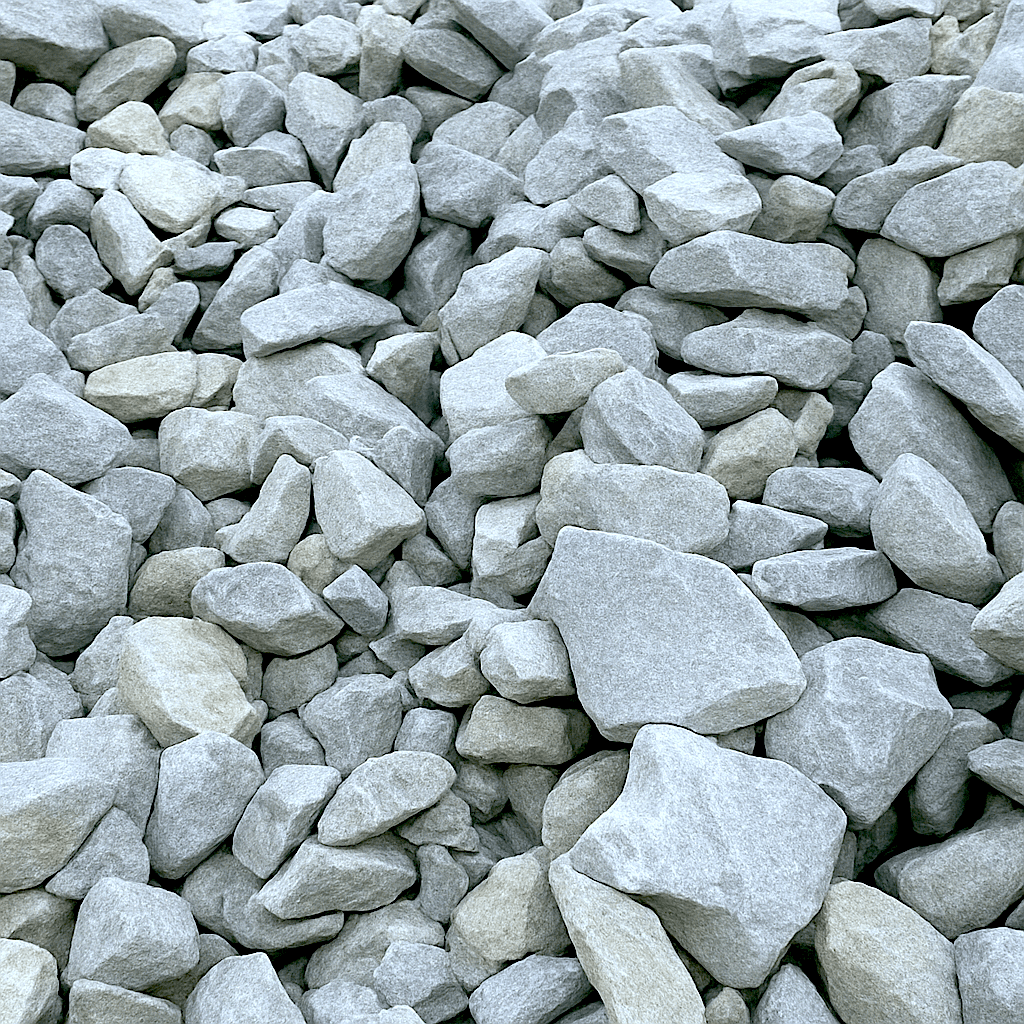
El Riprap no son solo "piedras grandes". Es piedra angular de tamaño específico diseñada para entrelazarse. Sin embargo, un muro de piedras grandes tiene huecos que permiten que la tierra se filtre. Para solucionarlo, los profesionales usan un Filtro a granel en múltiples etapas.
- Material principal: Riprap de 6" a 12" (para la base y la cara).
- El relleno: Crusher Run (una mezcla de piedra de 3/4" y polvo).
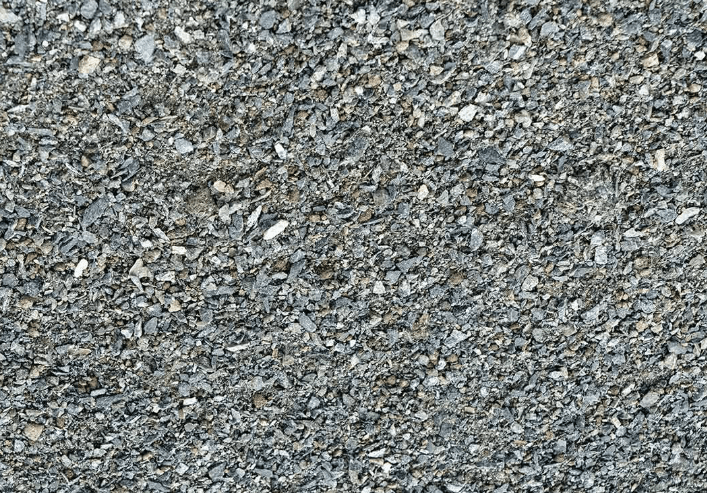
- El acabado: Polvo de piedra/Screenings (el polvo "sobrante").
Especificaciones de la obra: muro de Riprap o base de carretera
| Stage | Bulk Material | Function | Pro Tip |
|---|---|---|---|
| 1. Foundation | Woven Geotextile | Load Distribution | Without this, your heavy riprap will sink into the mud. |
| 2. Armor Layer | 6"-12" Riprap | Structural Mass | Place by hand or bucket; never just dump it in a pile. |
| 3. The Interlock | Crusher Run | Void Filling | Pour this over the riprap to fill the large air pockets. |
| 4. Surface Seal | Stone Dust | Compaction Crust | Water this down to create a concrete-like finish. |
Qué hacer con lo "no tan perfecto" (el polvo)
Después de una gran entrega a granel, a menudo te queda una "cola" de polvo de piedra y fragmentos más pequeños. No lo tires.
- Nivelación de lajas: El polvo de piedra es el mejor material de asiento para adoquines o caminos de lajas naturales. No se lava como la arena y se compacta mucho más apretado.
- Establos y caminos de mucho tránsito: Usa tu polvo sobrante en "salidas" de establos o en portones embarrados. Cuando se moja y el ganado lo pisa, forma una capa dura y resistente al barro.
- El "barrido": Si has construido un camino de Riprap, barre el polvo sobrante dentro de las grietas. Actúa como un mortero natural, fijando las piedras grandes entre sí para que no "rueden" bajo las llantas de los camiones.
Qué hacer con lo "no tan perfecto" (el polvo)
Después de una gran entrega a granel, a menudo te queda una "cola" de polvo de piedra y fragmentos más pequeños. No lo tires.
- Nivelación de lajas: El polvo de piedra es el mejor material de asiento para adoquines o caminos de lajas naturales. No se lava como la arena y se compacta mucho más apretado.
- Establos y caminos de mucho tránsito: Usa tu polvo sobrante en "salidas" de establos o en portones embarrados. Cuando se moja y el ganado lo pisa, forma una capa dura y resistente al barro.
- El "barrido": Si has construido un camino de Riprap, barre el polvo sobrante dentro de las grietas. Actúa como un mortero natural, fijando las piedras grandes entre sí para que no "rueden" bajo las llantas de los camiones.
Cuándo DEBES ir más grande (12"–24"+)
Solo deberías subir a Riprap (12"–24") o rocas grandes si estás lidiando con agua de alta velocidad o alta energía.
- Curvas de río: Si un río golpea tu orilla directamente a alta velocidad, las piedras de 6"–12" podrían ser "arrancadas" una por una.
- Terraplenes empinados: En una pendiente muy empinada 2:1, se necesitan piedras más grandes para resistir la gravedad.
- Acción costera: Si estás lidiando con olas de lago o acción de marea, necesitas el peso masivo de piedras de 18"–36" para romper la energía de la ola.

Cómo construir la carretera de Riprap "rellenada"
Como se ve en la foto del "después", no estamos simplemente tirando piedras; estamos creando una matriz estructural. Esta es la lógica paso a paso corregida:
1. La base pesada
No te limites a cavar una zanja; crea una "cuna". Forra tu excavación con geotextil tejido de alta resistencia. A diferencia del material tipo fieltro para drenajes, este actúa como un suelo. Evita que el Riprap de 12" literalmente "perfore" el suelo blando bajo el peso de un camión.
2. El "esqueleto" de Riprap
Coloca tu Riprap más grande como capa inferior. Esta es tu "piedra de armadura". Como estas piedras son grandes y angulares, proporcionan el soporte estructural principal. Sin embargo, tienen "vacíos" (bolsas de aire) que permitirían que la carretera se asiente de manera desigual con el tiempo.
3. Calzado con Crusher Run (la "cuña")
Aquí es donde ocurre la magia. Viertes Crusher Run sobre y detrás del Riprap. Las piedras de 3/4" del Crusher Run caen en los grandes huecos, mientras que el polvo de piedra (finos) rellena las grietas pequeñas. Usa un minicargador o un rastrillo pesado para hacer vibrar este material hacia abajo.
4. La capa de compactación (el sellado)
El "desecho" o el polvo de piedra sobrante se esparce como una capa final de 2 inches.
- El secreto: Debes mojarlo hasta que tenga la consistencia de una avena espesa.
- La acción: Golpéalo con una compactadora de placa vibratoria.
- El resultado: El agua ayuda a que las partículas de polvo se "enganchen" entre sí. Una vez seca, crea una superficie que parece de concreto pero sigue siendo lo suficientemente flexible para soportar el ciclo de congelación-descongelación de lugares como Indiana o Missouri.
Para construirlo como la foto de nivel profesional que comentamos, sigue esta secuencia específica de materiales:
| Build Phase | Action | Why it Matters |
|---|---|---|
| 1. The Base | Lay Woven Fabric + 4" Crusher Run | Provides a level, hard "shelf" for the heavy armor to sit on. |
| 2. The Armor | Set Riprap (6"-12") | The main structural barrier against erosion or weight. |
| 3. The Infill | Vibrate Crusher Run into gaps | Fills the "voids" so the big stones can't roll or wobble. |
| 4. The Seal | Wet & Compact Stone Dust | Creates a shed-layer that keeps rain from enters the core. |
Equipamiento recomendado y suministro a granel
Para manejar estas cargas masivas, necesitas herramientas que puedan soportar vibración de alto impacto y levantamiento de peso.
- La compactadora de placa Yardmax 2500 lb. 6.5 HP está diseñada para fijar estas matrices de piedra y polvo. Su alta fuerza centrífuga es exactamente lo que se necesita para convertir el polvo de piedra en una capa sólida.
- Para mover las piedras de armadura más grandes de 12", un accesorio VEVOR Heavy-Duty Pallet Fork Skid Steer te permite colocar piedras de Riprap individuales con precisión en lugar de solo volcarlas.