If you're building a new gravel driveway, repairing an old one or adding stone to a muddy parking area, you'll probably come across two common materials:
crusher run and #57 stone.
They are both crushed aggregate, but they do very different jobs.
For homeowners, DIY buyers and small contractors searching for crusher run near me, #57 stone near me, driveway gravel near me, crushed stone delivery or gravel prices near me, choosing the correct material matters more than simply buying whichever product has the lowest price per ton.
The quick answer:
- Crusher run is usually better when you need a material that compacts into a strong base.
- #57 stone is usually better when you need clean stone, drainage or a fresh surface over an already stable driveway.
- Some driveways use both, but not every driveway needs both.
The right choice depends on what is underneath your driveway and what problem you're trying to solve.
| Feature | Crusher Run | #57 Stone | Best Choice |
|---|---|---|---|
| Material Type | Crushed stone mixed with fines | Clean crushed stone with very few fines | Depends on project |
| Compaction | Excellent | Limited | Crusher Run |
| Drainage | Lower — fines fill the voids | Excellent water movement | #57 Stone |
| New Driveway Base | ✓ Strong, dense structural layer | Better over an existing stable base | Crusher Run |
| Driveway Resurfacing | Good for repairing weak areas | ✓ Cleaner finished surface | #57 Stone |
| Muddy or Soft Ground | ✓ Better for rebuilding a failed base | Can sink into weak soil | Crusher Run |
| French Drains | Not typically preferred | ✓ Ideal clean drainage stone | #57 Stone |
| Appearance | Dense, compact, more utilitarian | Cleaner, more traditional gravel look | #57 Stone |
| Dust | More dust during dry weather | Less dusty | #57 Stone |
| Best Overall Use | Base, structure & compaction | Drainage & finished surface | Often used together |
Material names vary by region, so always check the actual product description before ordering.
What Is Crusher Run?


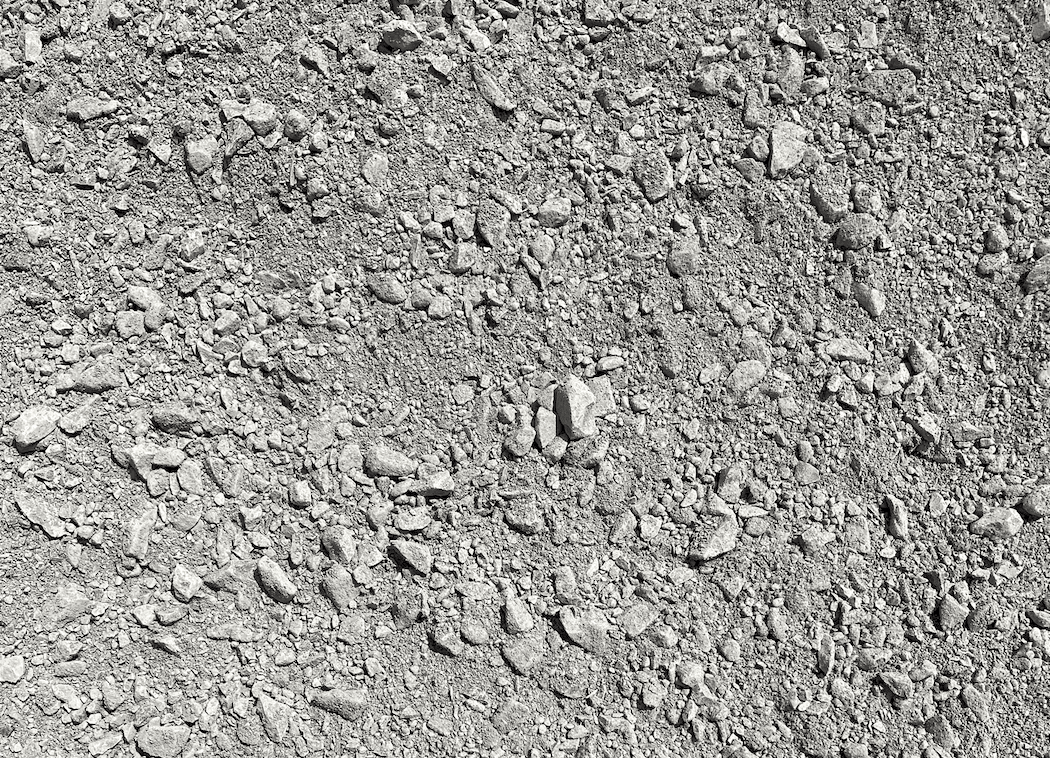
Crusher run is a mixture of crushed stone in different sizes together with smaller particles called fines or stone dust.
You may also see similar compactable products marketed locally as:
- crush and run
- crusher run gravel
- road base
- ABC stone
- dense-grade aggregate
- DGA
- base course
- graded aggregate base
These names are not always identical specifications, but they describe the same general category of material: crushed aggregate designed to form a compact, stable layer.
Why Crusher Run Compacts
The larger stone provides strength.
The smaller stone and fines fill the spaces between those larger particles.
When crusher run is spread, moisture-conditioned when appropriate and compacted, the particles lock together and create a dense surface.
That's why contractors frequently use it beneath:
- gravel driveways
- private roads
- parking areas
- equipment pads
- patios
- concrete
- pavers
- construction entrances
If you're starting with bare soil, crusher run is generally much closer to what you need than clean decorative stone.
What Is #57 Stone?


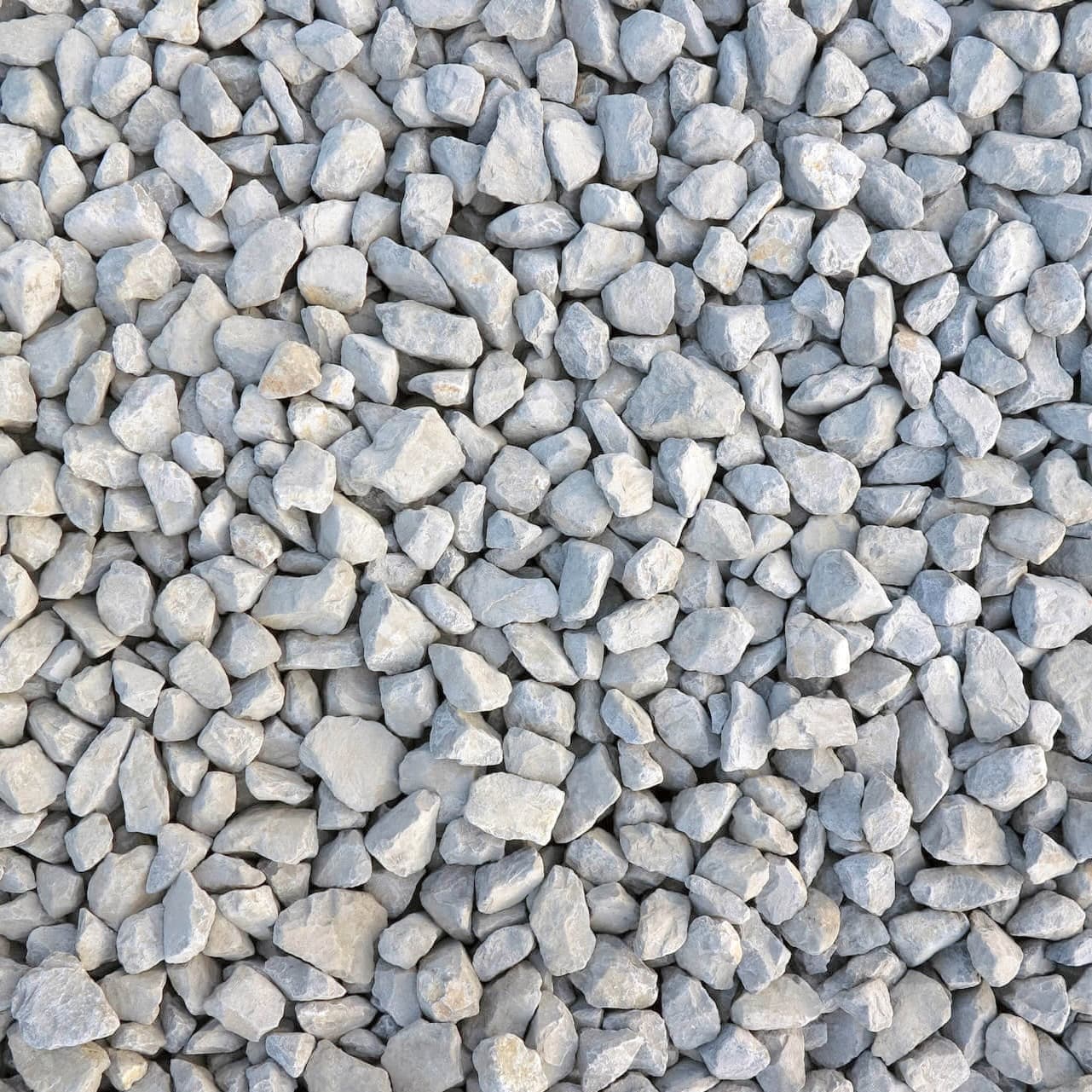
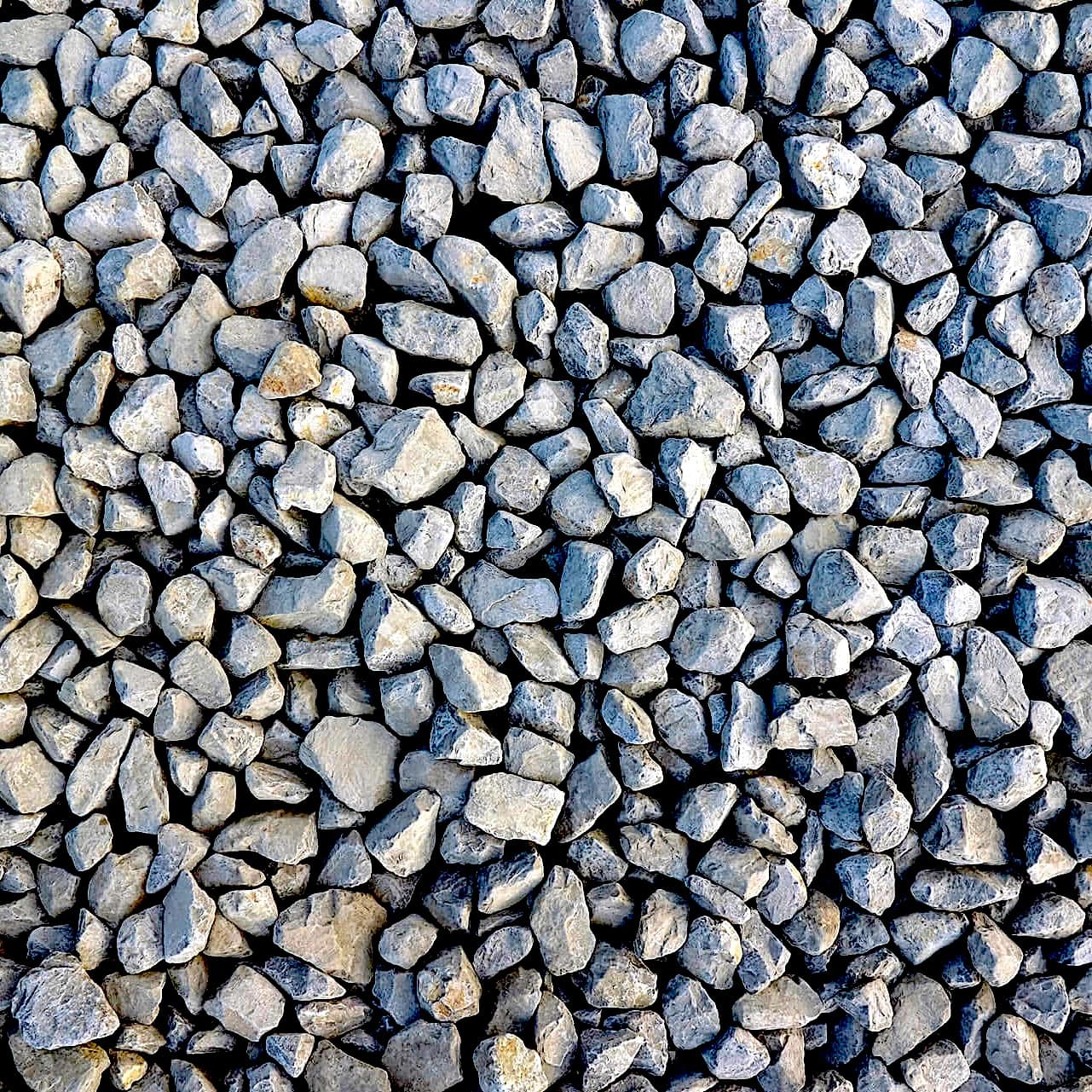
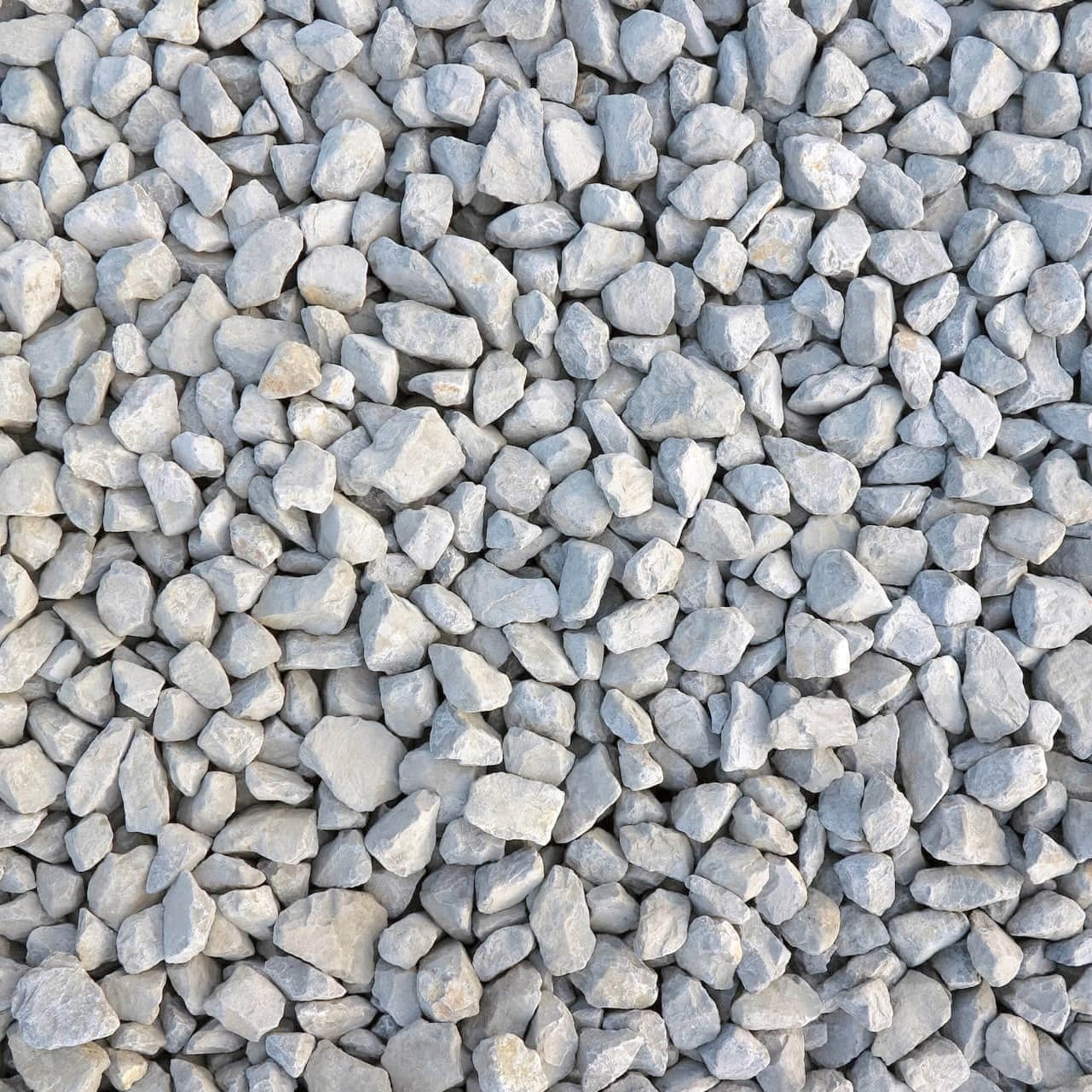
#57 stone is a common size designation for clean crushed aggregate.
Depending on where you live, #57 may be produced from:
- limestone
- granite
- trap rock
- other locally available stone
It is commonly around the 3/4-inch range, although exact gradation depends on the supplier and local specification.
Unlike crusher run, #57 stone generally contains very little fine material.
That means water can move through the spaces between the stones more easily.
Common Uses for #57 Stone
#57 stone is widely used for:
- driveway surfaces
- drainage
- French drains
- parking areas
- concrete aggregate
- backfill
- landscaping
- construction projects
It can also make an attractive driveway surface because it looks cleaner than material containing a large amount of fines.
Crusher Run vs #57 Stone: What's the Real Difference?
The important difference isn't simply stone size.
It is how the material behaves after installation.
Crusher Run
Contains fines.
Designed to compact.
Creates a dense base.
Good for structural support.
#57 Stone
Mostly clean stone.
Doesn't form the same dense bound layer.
Allows more water movement through the aggregate.
Good for drainage and surface applications.
Think of it this way:
Crusher run builds the foundation.
#57 stone can provide drainage or the finished stone surface.
But that doesn't mean every driveway automatically needs both.
Which Is Better for a New Gravel Driveway?
For most new gravel driveways, the priority is building a stable base.
If you're starting with excavated soil rather than an existing stone driveway, a compactable base such as crusher run is usually the better starting material.
A typical project may involve:
- removing unsuitable topsoil or vegetation;
- shaping and grading the subgrade;
- addressing drainage;
- installing geotextile where site conditions call for it;
- placing compactable aggregate;
- compacting the material in layers;
- optionally adding a different surface aggregate.
The biggest mistake is assuming the visible gravel is what gives the driveway its strength.
Usually, the layers underneath matter much more.
Do You Need #57 Stone on Top of Crusher Run?
Not necessarily.
This depends on the result you want.
Crusher Run Alone
Crusher run can work well as the finished surface for:
- rural driveways
- work areas
- construction access
- utility areas
- budget-focused projects
It generally creates a hard, compact surface.
The downside is that the fines may produce dust during dry weather and the appearance is more utilitarian.
Crusher Run + #57 Stone
Adding #57 stone over a properly prepared compacted base can create:
- a cleaner appearance
- less surface dust
- a more defined gravel texture
This is popular for residential driveways where the owner wants both structural performance and a traditional gravel appearance.
#57 Stone Alone
If you already have a strong, compacted driveway base and simply want to refresh the surface, you may not need new crusher run at all.
A new layer of #57 stone—or another suitable local surface aggregate—may be enough.
So the real answer isn't:
“Which product is better?”
It's:
“What does my driveway need right now?”
What Should You Use for a Muddy Driveway?
If your driveway repeatedly becomes muddy, simply dumping clean gravel on top may not solve the problem.
Mud usually indicates an underlying issue such as:
- weak subgrade
- inadequate stone depth
- poor drainage
- standing water
- improper grading
- insufficient compaction
In those situations, adding #57 stone can temporarily improve the appearance while the stone slowly works into the soft material underneath.
A better repair may require removing unstable material and rebuilding the area with a compactable base such as crusher run.
If water is the real problem, drainage needs to be addressed as well.
No type of gravel can permanently fix water flowing through the wrong part of your driveway.
Which Is Better for Potholes?
It depends on why the pothole formed.
For deep potholes where the underlying material has failed, simply filling the hole with clean #57 stone may not last.
The repair usually needs to be:
clean out loose material → restore base → compact → finish surface
Crusher run or another compactable base aggregate is often useful for rebuilding the damaged area.
If the driveway already has a strong base and only needs resurfacing, clean stone may be appropriate afterward.
Which Is Better for Drainage?
For drainage applications, #57 stone is usually the clear winner.
Because it contains fewer fines, it leaves open voids where water can move.
That's why clean crushed stone is commonly used around:
- perforated drainage pipes
- French drains
- foundation drainage
- drainage trenches
- certain retaining-wall systems
Crusher run behaves differently.
Its fines help close the spaces between the larger stone—which is useful for compaction but usually not what you want in a drainage layer.
Which Is Better for a Parking Pad?
For a parking area that will carry cars, SUVs or pickup trucks, you typically need a stable base.
That usually favors:
crusher run → compacted base
Then, depending on the desired appearance and design:
optional clean stone surface → #57 or another appropriate aggregate
If the site is already a solid existing gravel area, you may only need additional surface stone.
If the parking area is currently grass or soft soil, don't expect a couple inches of #57 stone to turn it into a durable parking pad.
Build the base first.
How Deep Should Driveway Gravel Be?
There isn't one correct depth for every driveway.
Required depth depends on:
- soil strength
- vehicle weight
- drainage
- existing base
- climate
- traffic frequency
- aggregate type
A light-duty residential resurfacing project might only need a modest new surface layer.
A completely new driveway over weak soil may require substantially more excavation and base material.
If you're unsure, it is better to evaluate the existing ground before ordering than to guess based on a universal online rule.
How Much Crusher Run or #57 Stone Do You Need?
Start with volume.
Basic Formula
Length × Width × Depth = cubic volume
If you're measuring in feet:
Length × Width × Depth in feet ÷ 27 = cubic yards
For example:
A driveway section measuring:
- 50 feet long
- 10 feet wide
- 4 inches deep
becomes:
50 × 10 × 0.333 ÷ 27
= approximately 6.2 cubic yards
But cubic yards are not automatically the same as tons.
Different aggregate products have different densities.
The weight of:
- crusher run
- limestone
- granite
- recycled concrete
- gravel
can vary.
Use the density or calculator for the exact material you're ordering rather than applying one universal tons-per-yard number.
Crusher Run Price vs #57 Stone Price
People often search for:
- crusher run price per ton
- #57 stone price per ton
- gravel prices near me
- crush and run gravel prices near me
- how much is a load of gravel
- gravel delivery cost
But comparing only the quarry price can be misleading.
The final delivered price depends on:
- material
- quantity
- supplier location
- delivery distance
- truck size
- number of loads
- local stone availability
A cheaper quarry 50 miles away can end up costing more than a slightly higher-priced supplier 10 miles from the job.
That's why the useful comparison is:
delivered price to your address
rather than simply:
price per ton at the quarry.
Is Crusher Run Cheaper Than #57 Stone?
Often, crusher run can be less expensive because it contains both larger crushed stone and fines and requires less processing than washed or cleaned aggregate.
But this varies by region.
In some markets, limestone is inexpensive.
In others, granite, recycled concrete or another locally available aggregate may be more economical.
Your cheapest option also isn't necessarily the best value.
Saving $100 on the wrong material can become expensive if the driveway needs to be rebuilt six months later.
Crusher Run Near Me vs #57 Stone Near Me: What Should I Search For?
Product names vary dramatically across the United States.
If you don't find “crusher run” locally, try searching for:
- crush and run near me
- road base near me
- driveway base near me
- ABC stone near me
- dense grade aggregate near me
- base course near me
If you're looking for #57 stone, searches may include:
- #57 stone near me
- #57 gravel near me
- #57 limestone near me
- 3/4 crushed stone near me
- clean stone near me
- driveway gravel near me
The actual available product depends on the stone quarried in your region.
Buying Gravel by the Ton vs Bags
For a tiny repair, bagged stone may be convenient.
For a driveway, parking pad or substantial drainage project, bulk delivery usually makes far more sense.
A driveway can require several tons or even multiple truckloads of aggregate.
Trying to transport that quantity in bags or repeated pickup-truck trips becomes expensive and time-consuming.
Bulk material can typically be delivered using different truck sizes depending on:
- order quantity
- driveway access
- weight restrictions
- maneuvering space
- local availability
For homeowners, DIY buyers and small contractors, choosing the correct truck can be almost as important as choosing the stone.
Before Ordering Gravel Delivery
Make sure the delivery truck can safely reach the dump location.
Check for:
- overhead power lines
- low tree branches
- narrow gates
- weak culverts
- septic systems
- soft lawns
- steep slopes
- tight turns
- parked vehicles
A loaded dump truck is much heavier than a normal pickup.
The driver also needs enough room to raise the bed safely if the load is being dumped.
And remember:
delivery does not automatically mean spreading or installation.
If you need the aggregate distributed across a driveway, plan how you'll move it after delivery.
Crusher Run vs #57 Stone: Which Should You Buy?
Use this simple rule.
Choose Crusher Run If:
You are:
- building a new driveway base
- rebuilding soft areas
- filling deep potholes
- constructing a gravel parking pad
- creating a compacted private road
- looking for a stable structural layer
Choose #57 Stone If:
You are:
- resurfacing an existing stable driveway
- building drainage
- installing a French drain
- looking for a cleaner stone surface
- adding aggregate over an established base
Consider Both If:
You're building a new residential gravel driveway and want:
a compacted structural base + a cleaner stone surface.
But don't automatically order both.
First determine whether your existing driveway already has a strong base.
Where Can I Buy Crusher Run or #57 Stone Near Me?
You don't necessarily need to call multiple quarries and landscape yards to find out who delivers to your property.
Aggregate Markets lets homeowners, contractors and property owners search for bulk construction and landscaping materials based on the delivery location.
Depending on availability in your area, you can find products such as:
- crusher run
- crush and run
- road base
- #57 stone
- crushed limestone
- crushed granite
- recycled concrete
- driveway gravel
- drainage stone
and compare options for delivery directly to your home or job site.
For someone searching “gravel delivery near me”, the most useful number isn't simply the cheapest price per ton.
It's the cost of getting the right material, in the right quantity, delivered to the right property.
FAQ
Is crusher run better than #57 stone for a driveway?
For the structural base of a new driveway, crusher run is generally the better choice because it compacts. For resurfacing an already stable driveway, #57 stone may be the better option.
Can I put #57 stone directly over dirt?
You can, but it may not perform well if the soil is soft. The clean stone can work into the subgrade and develop ruts. A prepared and compacted base is usually preferable.
Can crusher run be used as the final driveway surface?
Yes. Many driveways use crusher run as both the base and final surface, particularly rural and utility driveways.
Does #57 stone compact?
It will settle and interlock somewhat under traffic, but it does not compact into the same dense layer as crusher run because it lacks the fines that fill the spaces between stones.
What is the best gravel for a muddy driveway?
If the driveway is muddy because the base has failed, adding clean gravel alone may not solve it. Correct drainage problems and rebuild weak sections with compactable base material first.
Is crusher run the same as crush and run?
The terms are often used interchangeably, but specifications vary between suppliers. Always check the gradation and product description.
How much does crusher run cost near me?
Prices vary significantly by region and delivery distance. Compare the delivered price to your address, not only the material price per ton.
Where can I get #57 stone delivered near me?
Search based on your actual delivery location. #57 stone may be limestone, granite or another locally sourced aggregate depending on your region.
What is the cheapest driveway gravel?
A locally sourced compactable aggregate is often economical, but the cheapest stone per ton isn't necessarily the cheapest finished driveway. Delivery distance and whether the material is appropriate for the project can matter more.
How much gravel do I need for my driveway?
Calculate length × width × depth to determine volume, then convert using the density of the specific material you're ordering.