Starting a new home, commercial building, warehouse, shop, road, parking lot, or land-development project usually begins with material long before concrete is poured.
The existing ground may need to be excavated, raised, stabilized, graded, or replaced. Building pads need to reach the correct elevation. Roads and construction entrances need a compactable base. Foundation areas may require select fill. Utility crews need bedding and backfill. Concrete work requires sand and aggregate. Finished grades may require topsoil or screened soil.
For contractors, builders, developers, excavation crews, and property owners, that can mean anything from a few truckloads to hundreds or thousands of tons of fill dirt, select fill, crushed limestone, road base, sand, gravel, and other construction aggregates.
In Texas, choosing the correct material is particularly important because soil conditions can vary significantly from one project to another. TxDOT notes that Texas has some of the most expansive soils in the country and treats subgrade, select fill, and base materials as separate parts of pavement and site preparation.
The correct material therefore depends on what you are building, the existing soil, required elevation, expected loads, drainage conditions, and any specifications provided by your engineer or geotechnical report.
If you are searching for construction materials near you, foundation fill dirt, select fill delivery, road base, crushed limestone, bulk sand, or aggregate delivery in Texas, the first step is understanding which layer of the project you are actually trying to build.

What Materials Are Used for Construction and Foundation Preparation?
Most construction sites use several different materials rather than one type of dirt or aggregate from beginning to end.
A site may start with economical bulk fill to establish elevation, transition to select or structural fill around the building pad, use compactable aggregate beneath pavement or access roads, install clean stone around drainage systems, and finish with screened topsoil around landscaped areas.
Using the correct material for each layer can reduce unnecessary material cost while giving the contractor the properties needed for that portion of the project.
The names used for these materials can change between states, regions, and individual quarries. Road base, crusher run, flex base, aggregate base, ABC, GAB, base course, and crushed limestone base can describe similar materials in some markets while referring to different specifications in others.
For engineered work, the project specification should always control the material selection.
Select Fill for Building Pads and Foundations
Select fill is one of the most important materials for buyers preparing building pads, foundations, slabs, commercial developments, and other load-bearing areas.
Unlike ordinary fill dirt, select fill is chosen because its soil characteristics allow more controlled placement and compaction. Depending on the project, specifications may establish requirements for plasticity, gradation, moisture content, density, and other engineering properties.
That distinction matters.
If a contractor needs 80 truckloads simply to raise a distant portion of a property, economical common fill may be appropriate. If those same truckloads are going directly beneath a structural building pad, the geotechnical engineer may require a specific select fill instead.
Select fill is commonly used for new homes, warehouses, commercial buildings, shops, industrial sites, apartment developments, parking areas, roadway projects, and other construction where the finished grade must support substantial loads.
On larger projects, select fill may be delivered continuously as excavation and grading crews build the site upward in compacted lifts. The amount required can increase quickly when a pad must be raised several feet or when the improved area extends beyond the footprint of the building itself.
Texas projects in particular may include project-specific requirements for select fill and moisture-controlled compaction. There is not one universal select-fill specification that is correct for every Texas foundation project, so contractors should source material according to the plans and geotechnical recommendations rather than assuming that any material labeled “select fill” will qualify.
Fill Dirt for Large-Volume Filling and Site Grading
Not every part of a construction project requires engineered material.
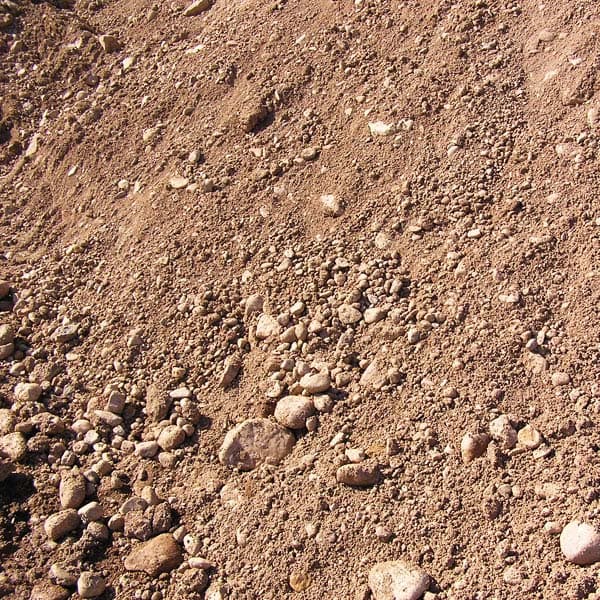
Fill dirt, common fill, and unscreened soil are commonly used when the primary objective is to add volume, raise elevation, reshape a property, or establish rough grade.
For large developments, this can be one of the biggest material requirements on the entire project.
Fill material may be needed to raise a house site above surrounding ground, build up a commercial development, fill excavated areas, correct low sections of a property, shape slopes and berms, or establish the general site profile before more controlled materials are installed.
This is where purchasing strategy matters.
Using expensive screened topsoil or select fill throughout an entire deep fill area can unnecessarily increase material cost. Many projects instead use suitable bulk fill for volume and then transition to specified select fill, aggregate base, screened soil, or topsoil as they approach the finished layer.
For contractors searching for bulk fill dirt delivery in Texas, the important information is usually the required volume, destination, accessibility, desired material characteristics, project schedule, and whether the fill is being used structurally or simply to establish grade.
Road Base, Crusher Run and Crushed Limestone for Construction Sites
Once elevations are established, many projects require a dense aggregate layer capable of supporting traffic or finished construction.
Road base, crusher run, crushed limestone base, flex base, and other dense-graded aggregates contain a mixture of larger aggregate and fines. When properly graded, moisture-conditioned, and mechanically compacted, the particles lock together to form a much denser layer than clean gravel.
These materials are commonly used beneath driveways, private roads, construction entrances, parking lots, concrete, asphalt, pavers, equipment yards, and other areas requiring a compacted foundation.
They are especially important during active construction.
A raw site may receive repeated traffic from dump trucks, concrete trucks, excavators, loaders, cranes, delivery vehicles, and subcontractors. Establishing a suitable aggregate construction entrance or working surface can help keep equipment moving and provide access as the project progresses.
TxDOT's flexible-base guidance describes structural base as a foundational pavement layer and notes that material selection depends on factors including subgrade strength, traffic loading, confinement, availability, and cost.
For private construction, the exact specification may differ from TxDOT requirements, but the same principle applies: the right base material depends on what it is expected to support.
Texas Flex Base and Limestone Base
In Texas, buyers frequently search for flex base, limestone base, crushed limestone road base, aggregate base, and road base material.
These materials are particularly relevant for contractors working on roads, subdivisions, construction entrances, parking areas, commercial sites, ranch roads, equipment yards, and large driveways.
A dense limestone base usually contains crushed stone combined with smaller particles and limestone fines. The fines fill voids as the material is compacted, creating a firm surface capable of distributing loads into the layers below.
For major or permitted projects, contractors should not assume that every quarry's “road base” meets the same specification.
TxDOT itself uses multiple grades of flexible base for different pavement conditions.
If the plans specify TxDOT material, a particular gradation, plasticity requirement, or another engineering standard, provide that specification when requesting material rather than ordering only by a generic product name.
#57 Stone for Foundation Drainage and Construction
Not every foundation material should compact tightly.
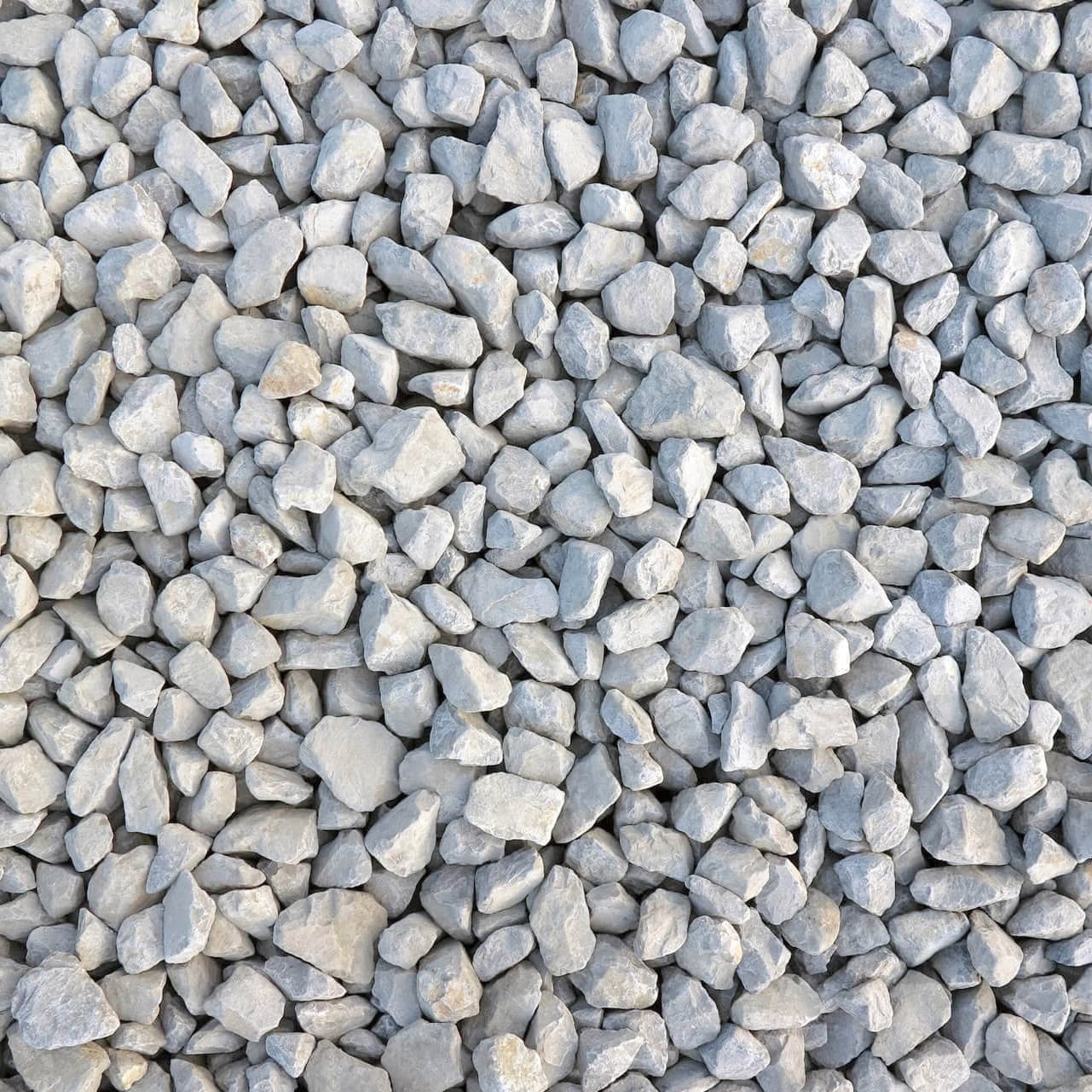
Where water needs to move through the aggregate, contractors often use a clean stone such as #57 limestone, #57 granite, washed stone, or another locally specified drainage aggregate.
#57 stone generally contains angular aggregate around 1/2 inch to 1 inch with relatively few fines. Because there is less stone dust filling the spaces between particles, water can move through the installed layer.
This makes clean stone useful for foundation drainage, retaining-wall backfill, French drains, utility trenches, pipe bedding, septic applications, concrete aggregate, drainage beneath slabs, and other construction areas where open drainage is required.
This is also why #57 stone and crusher run should not automatically be treated as interchangeable products.
Crusher run is generally selected when compaction is required.
#57 stone is generally selected when clean aggregate and drainage are required.
On an active commercial project, both may be needed in substantial quantities but used in completely different parts of the site.
Concrete Sand for Foundations, Concrete and Site Work
Concrete sand is another commonly ordered construction material for residential and commercial projects.
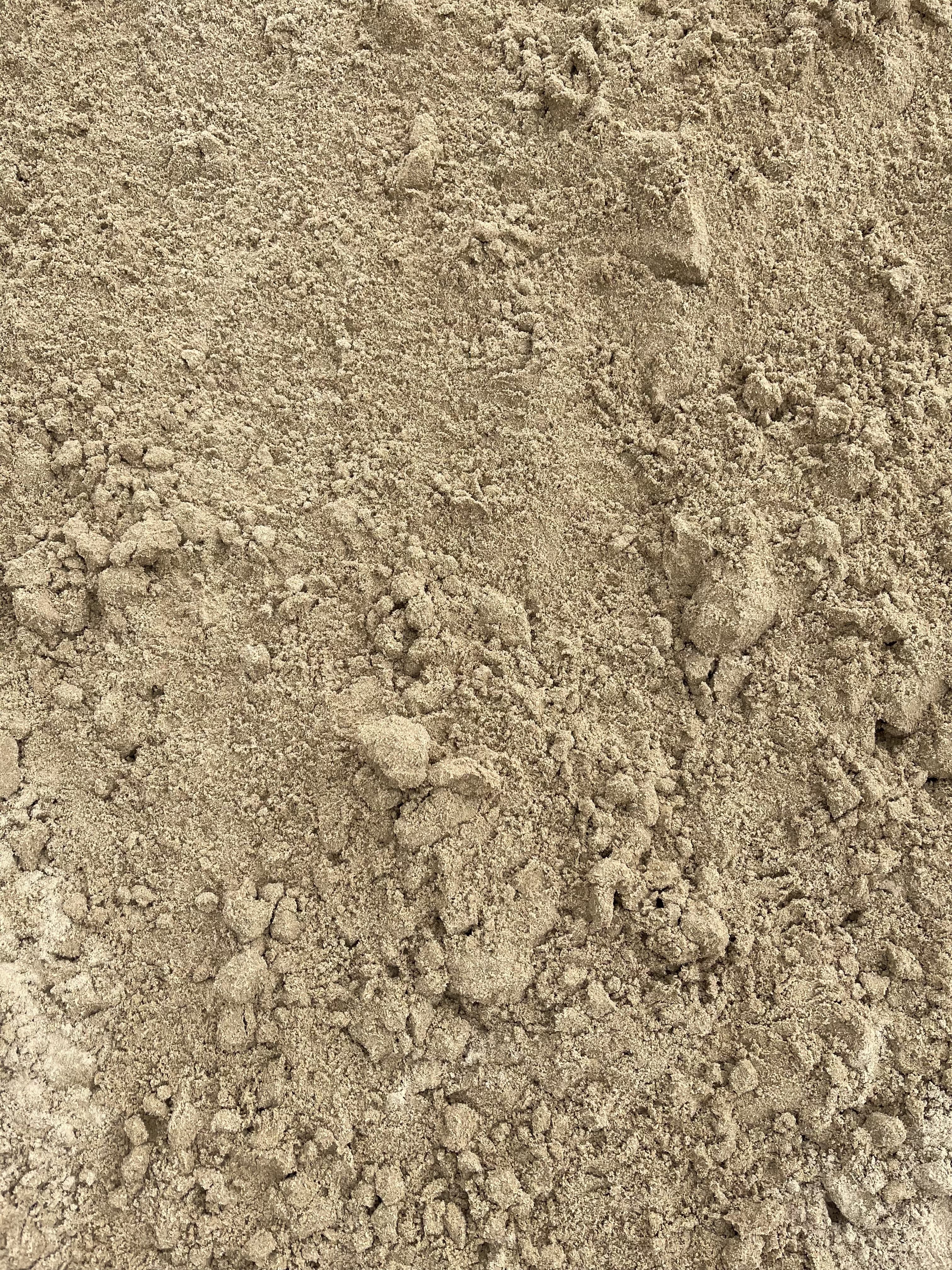
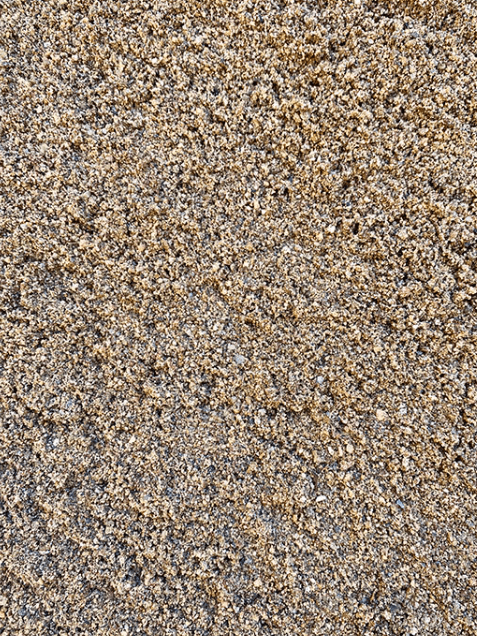
It is generally a clean, coarse sand used in concrete production, paver bedding, utility work, pipe bedding, drainage applications, and general site preparation.
Concrete contractors may require sand for ready-mix or site-mixed concrete applications, while hardscape crews use it as a workable leveling layer over a compacted aggregate base.
Utility contractors may also use approved sand around pipes or underground infrastructure where a cleaner and more uniform bedding material is required.
For larger projects, sand is usually more economical and practical when supplied in bulk rather than purchased in bags. Dump-truck delivery allows contractors to stage larger volumes near the active work area and replenish stock as construction progresses.
Foundation Backfill: Do Not Assume One Material Works Everywhere
“Foundation backfill” is a high-intent construction-material search, but there is no single material that is correct for every foundation.
The required material depends on where the backfill is being placed and what it needs to do.
Structural areas may require approved select fill or another compactable material. Drainage areas around foundations or retaining walls may require clean crushed stone. Utility penetrations may require sand or another specified bedding material. Non-structural grade adjustment may allow ordinary fill.
A contractor ordering material should therefore distinguish between structural backfill, drainage backfill, trench backfill, and general fill.
For engineered structures, follow the geotechnical and structural plans.
Ordering the cheapest available dirt and discovering after delivery that it does not meet the specification is considerably more expensive than confirming the material requirement beforehand.
Building a House Pad or Commercial Building Pad
One of the most material-intensive stages of new construction can be establishing the building pad.
A sloped or low property may require substantial elevation buildup before foundation construction begins. On larger sites, this can mean dozens or hundreds of truckloads of soil.
The typical sequence may include removing unsuitable surface material, preparing the existing subgrade, importing approved fill, placing the fill in controlled layers, moisture-conditioning and compacting those layers, establishing final pad elevation, and then completing the specified base or foundation preparation.
The actual sequence, depth, material type, lift thickness, testing requirements, and compaction target should come from the project plans and geotechnical recommendations.
From a purchasing perspective, however, the key issue is volume and continuity of supply.
A grading contractor with excavators, dozers, compactors, and crews working on site cannot efficiently operate if material deliveries arrive inconsistently. Larger building-pad projects may therefore require coordinated sourcing from one or more nearby material sources capable of supporting the required daily trucking volume.
This is where proximity matters almost as much as the material price itself.
A quarry or soil source with a lower material price can still produce a higher delivered cost if trucks must travel substantially farther to the project.
Construction Material Delivery by the Truckload
Bulk construction materials are generally purchased differently from normal retail building products.
The material may be inexpensive at the quarry or pit, while transportation represents a significant portion of the delivered cost.
The actual delivered price can depend on material type, source location, project location, order quantity, truck type, haul distance, site access, local trucking rates, and current material availability.
That means searching only for the lowest price per ton does not necessarily identify the lowest delivered price.
For most contractors and property owners, the more useful comparison is:
material + trucking + quantity + source distance + project requirements = delivered job-site cost.
Aggregate Markets matches bulk construction-material demand with available quarry, soil, sand, gravel, and aggregate sources serving the delivery area so buyers can evaluate material availability and delivered pricing for their location.
Bulk Construction Materials for Texas Projects
Texas construction creates demand across a wide range of project types.
A residential builder may need select fill for a house pad, crushed limestone for a driveway, #57 stone for drainage, concrete sand during hardscape work, and screened topsoil once construction is complete.
A commercial contractor may require hundreds of truckloads of common fill followed by select fill, flexible base, drainage stone, and additional material as utilities, parking areas, and buildings progress.
A ranch or agricultural property may require fill dirt for grading, base material for access roads, crushed stone for equipment areas, and drainage aggregate around structures.
Municipal and infrastructure projects may require materials that meet much more specific gradation, testing, or engineering requirements.
For buyers searching in major Texas construction markets such as Houston, Dallas–Fort Worth, Austin, San Antonio, Central Texas, North Texas, East Texas, West Texas, and the Gulf Coast, the locally available material names and specifications may differ.
That is why it is useful to search by both material and application rather than relying on a single generic term.
A contractor may search for “select fill delivery,” “foundation fill,” “building pad dirt,” “flex base near me,” “limestone base delivery,” “road base by the truckload,” “bulk fill dirt,” “#57 limestone,” “construction sand,” or “aggregate delivery” while ultimately purchasing materials for the same development.
What to Provide When Ordering Foundation or Construction Materials
To source material accurately, provide the supplier or marketplace with:
- Project or delivery address
- Material name or project specification
- Required quantity in tons, cubic yards, or truckloads
- Intended application, such as building pad, road base, drainage, or general fill
- Desired delivery date and expected project duration
- Any TxDOT, geotechnical, gradation, PI, compaction, or engineering requirements
- Site access conditions and truck restrictions
- Whether material is needed once or continuously throughout the project
For a homeowner building a house or improving a property, you may not know all of these details. Your builder, excavator, concrete contractor, civil engineer, or geotechnical report can usually identify the required material.
For contractors, sending the specification at the beginning helps prevent pricing a material that will later be rejected by the project engineer or testing laboratory.
How Much Fill Dirt or Aggregate Does a Construction Project Need?
Material requirements can become much larger than they initially appear.
A shallow layer across a driveway may require only several truckloads. Raising a large house pad or commercial development by several feet can require hundreds or even thousands of cubic yards.
You also need to account for the difference between loose delivered material and compacted finished volume.
Fill and aggregate consolidate during placement and compaction. A project requiring a certain finished compacted volume therefore may need more loose delivered material than the final geometric volume alone suggests.
Side slopes, overbuild beyond the foundation footprint, transitions into surrounding grade, access areas, and material lost during grading can add additional volume.
For significant building-pad or commercial earthwork, quantities should be calculated from the grading plan or by the contractor or engineer responsible for the site rather than estimated from the building footprint alone.
Construction Material Supply for Ongoing Projects
Not every customer needs one delivery.
Large contractors may need material continuously for weeks or months as the project advances.
Early work may begin with fill dirt and construction entrances. Building-pad operations may then require select fill. Utility crews may need bedding aggregate. Parking and road crews may need flexible base. Concrete and drainage work can create additional aggregate demand. Landscaping contractors eventually require screened soil, topsoil, mulch, or decorative stone.
For these projects, material sourcing becomes a logistics problem as much as a purchasing problem.
The source must have the required material. Trucking capacity must match the contractor's placement rate. Deliveries need to reach the correct portion of the job site. The contractor may also need alternate sources available if production, weather, trucking, or quarry conditions change.
This is particularly important on high-volume Texas construction projects where haul distance and truck availability can materially affect both schedule and delivered cost.
Construction Materials Near Me vs. the Right Material Source
Many buyers begin with searches such as “fill dirt near me,” “select fill near me,” “road base near me,” “gravel delivery near me,” or “bulk construction materials near me.”
Distance is important, but the closest source is not automatically the best source.
A nearby quarry may not produce the required material. A soil pit may have fill dirt but not select fill that meets the project specification. A farther source may have a better delivered price because of loading efficiency, material cost, trucking availability, or project volume.
For engineered construction, material compliance comes before convenience.
For non-spec residential or commercial work, the best source is typically the one that offers the right combination of material suitability, availability, quantity, haul distance, and delivered cost.
From Raw Land to Finished Construction
A construction project can consume several completely different bulk materials before it is complete.
Raw land may first require clearing and rough filling.
Elevation is established with fill material.
The building area may receive select fill.
Construction entrances and roads receive compactable aggregate base.
Drainage systems receive clean stone.
Concrete work uses sand and aggregate.
Parking and paved areas receive additional base.
Finished landscape areas receive screened soil or topsoil.
Understanding these different layers makes it easier to buy the correct material at the correct stage instead of paying more for material properties the project does not need—or using a cheaper material where the plans require something more controlled.
Find Bulk Construction and Foundation Materials for Your Project
Whether you are preparing a house foundation, building pad, commercial development, warehouse, subdivision, road, parking lot, utility project, farm, ranch, or industrial site, the material requirement usually begins with three questions:
What material does the project require?
How much material is needed?
Which local source can deliver it economically to the job site?
Aggregate Markets helps homeowners, contractors, builders, excavation companies, developers, landscapers, municipalities, and commercial buyers source bulk construction materials from suppliers serving their project location.
Enter your delivery address to check available fill dirt, select fill, road base, crushed limestone, sand, gravel, drainage stone, topsoil, and other bulk construction materials and see delivered options for your project.
For larger or ongoing construction projects, material can be sourced around project quantities, specifications, delivery requirements, and job-site demand rather than treating each truckload as an individual retail purchase.